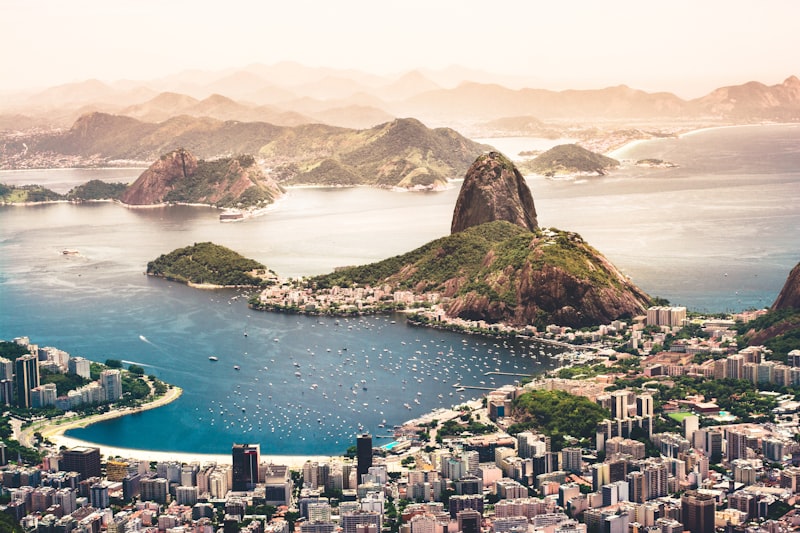
Brazil is South America's largest and most diverse travel destination — from the electricity of Rio de Janeiro's Carnival and Copacabana Beach to the business density of São Paulo, the ecological wonder of the Amazon rainforest, and the cultural heartbeat of Salvador da Bahia. With Brazil co-hosting the FIFA World Cup 2026 across multiple cities including Rio, São Paulo, Belo Horizonte, Porto Alegre, and Manaus, international visitors will arrive in unprecedented numbers. A lamasim Brazil eSIM starts from $3.80 per week and connects you to both Claro and Vivo, the country's two largest carriers, giving you dual-network coverage across this continent-sized nation. Vivo (owned by Telefónica) leads with the most extensive 4G and emerging 5G network in the southeast, while Claro provides strong complementary coverage in the north and northeast. Together they cover Brazil's major urban centers, coastal tourist zones, and the key Amazon gateway cities. Setup takes under 60 seconds — essential when you arrive at Guarulhos International or Galeão and want to call your driver without hunting for a local SIM. No ID is required, and every plan includes hotspot sharing. For World Cup 2026 travelers moving between Brazilian cities, lamasim's transparent weekly pricing eliminates the complexity of buying local SIMs at each new destination.
Is Brazil eSIM Worth It?
Brazil eSIM delivers exceptional value given the country's roaming costs and geography. Standard carrier roaming in Brazil runs $8–$15 per day from most North American and European providers — meaning a week exploring Rio and São Paulo costs $56–$105 in roaming alone. lamasim Brazil starts at $3.80 per week, a saving of up to $100 on a typical trip. For World Cup 2026 travelers spending three to four weeks crossing multiple Brazilian cities, the cumulative saving can exceed $300 compared to carrier roaming. Local Brazilian SIM cards require CPF (Brazilian tax registration) or passport verification, can be time-consuming to obtain, and may not work across all regions. lamasim requires no ID whatsoever. Brazil is also a country where staying connected has safety implications — being able to call an Uber rather than hailing a street taxi, checking neighborhoods before walking through them, and staying in contact with fellow travelers are all data-dependent activities. With hotspot included, one lamasim plan covers your whole travel party's navigation needs. The World Cup 2026 context makes pre-purchased eSIM especially smart — airport SIM vendors will be overwhelmed with international arrivals.
Best Networks in Brazil
lamasim Brazil leverages both Claro and Vivo, providing the most comprehensive dual-network coverage available in the country. Vivo, Brazil's largest carrier by subscribers, anchors coverage in São Paulo, Rio de Janeiro, Curitiba, Porto Alegre, and the broader southeast — the economic heartland and primary World Cup 2026 venue corridor. Vivo's 5G rollout is advancing rapidly in São Paulo and Rio, with speeds exceeding 500 Mbps in dense urban areas. Claro provides excellent coverage in the north and northeast, including Manaus (the Amazon gateway), Fortaleza, Recife, and Salvador da Bahia — regions where Vivo coverage can be thinner. In Manaus, Claro's network is the practical lifeline for Amazon tour operators and travelers on river routes. The dual-carrier approach means your lamasim eSIM automatically uses whichever network has stronger signal at your location. For Iguaçu Falls (shared with Argentina), both Claro and Vivo cover the Brazilian side of the falls and the main national park infrastructure. In the Amazon itself, coverage follows the main river arteries and larger settlements — deep jungle expeditions will leave any cellular network behind.
How to Install eSIM in Brazil
Installing lamasim Brazil takes under 60 seconds on compatible devices. On iPhone (XS or later): navigate to Settings, tap Cellular, select Add eSIM, choose Use QR Code, and scan the QR code from your lamasim email. The plan activates immediately. On Android: go to Settings, find SIM Card or Network settings, tap Add Mobile Plan, and scan your QR code. For Brazil specifically, we strongly recommend activating your eSIM before departure — Brazil's major international airports (Guarulhos in São Paulo and Galeão in Rio) have WiFi, but arrival halls can be chaotic, especially during peak seasons and World Cup 2026. Activating in advance means you're connected from the jet bridge. Brazil operates on 4G and 5G bands that are compatible with all modern unlocked smartphones. If you're arriving in Manaus for an Amazon expedition, activate before you leave São Paulo or Rio — connectivity in Manaus proper is fine, but Amazon river lodges may be your last chance to activate for days. No ID required — no interaction with airport vendors needed.
Brazil Data Usage Tips
Brazil's size and diversity demand smart data management. In Rio de Janeiro, Uber is the safest transport option from tourist areas — always have data active when navigating unfamiliar neighborhoods. Download offline Google Maps for Rio, São Paulo, and your specific itinerary cities before each leg of your trip. São Paulo's metro system has an official app that helps with navigation — download it on WiFi. For Amazon trips from Manaus, download all entertainment, offline maps, and translation content before boarding riverboats, as coverage disappears quickly beyond main settlements. Salvador's historic Pelourinho district has patchy indoor signal in some colonial buildings — download your hotel directions and restaurant bookings before exploring. For World Cup 2026 match days, stadium WiFi in Brazilian venues is often overloaded — use your lamasim hotspot for reliable connectivity. Brazil uses Portuguese, and Google Translate's offline Portuguese language pack is worth downloading. Weather in Brazil is highly localized — heavy afternoon rain in Rio is common from November to March; a local weather app helps plan outdoor activities around the unpredictable schedule.
“Used the hotspot to share with my colleague during a São Paulo conference — both of us online from one plan. Saved us a fortune versus hotel WiFi charges.”
— Tomás R., Buenos Aires
Frequently Asked Questions — Brazil eSIM
- Does lamasim work in Rio de Janeiro and São Paulo?
- Yes, both Claro and Vivo provide excellent 4G and 5G coverage across Rio de Janeiro and São Paulo. In Rio, you'll have strong signal in Copacabana, Ipanema, the historic center, and even at Corcovado and Sugarloaf Mountain. São Paulo's dense urban core and business districts like Paulista and Itaim Bibi are fully covered with 5G in many areas.
- Will lamasim work during the FIFA World Cup 2026 in Brazil?
- Yes. lamasim runs on Claro and Vivo, which are investing in network capacity for World Cup 2026 venues across Brazil. Purchasing lamasim in advance avoids the airport SIM kiosk queues that will be significant during the tournament. The hotspot feature means one plan can cover multiple devices in your travel group.
- Can I use lamasim for an Amazon rainforest trip?
- lamasim works well in Manaus, the main Amazon gateway city, via Claro's strong northern Brazil network. Along the main Amazon river arteries and in larger towns, you'll find coverage. Deep jungle lodges and remote tributaries are beyond cellular coverage for any carrier — download offline maps and entertainment before departing Manaus.
- Is a Brazilian eSIM safe to use for banking and payments?
- lamasim provides a standard mobile data connection — security depends on your banking app and whether you use HTTPS connections, exactly as it would at home. For sensitive transactions, avoid public WiFi and use your lamasim data connection directly. The hotspot feature lets you keep your laptop on your own secured connection rather than hotel WiFi.
- Does lamasim Brazil require any ID or CPF number?
- No. lamasim requires no ID, no CPF, and no Brazilian tax number — all of which are typically required to buy a local SIM card in Brazil. Simply purchase online, receive your QR code by email, and scan to activate in under 60 seconds.